I’m a graphic designer and marketing professional with a focus on branding, editorial, print, posters, album artwork, web design and digital content. I bring together creative thinking and commercial insight to develop distinctive, considered design that communicates with purpose and resonates with its audience.
Logo & Brand IdentityGraphic Design (Signage, Posters, Digital & Print)+9
More than a decade as a business analyst and project manager in finance, now building websites and AI tools through my Melbourne studio, Burl. Most projects go wrong because nobody agreed what finished looks like. I write that down first, then deliver against it. Recent work includes an AI platform used in Australian schools and a catalogue site for a Melbourne hospitality supplier. Plain English, no jargon, no lock in. Melbourne based, ABN registered.
Hey neighbour👋 Josh here. I’m a Melbourne-based dev with 10+ years of experience managing sites for Telstra, ANZ, and government. I build high-converting, instant-loading websites, eCommerce stores, and custom AI/automation tools for local businesses - strictly no outsourcing.
Learn more and see my portfolio at about/josh
I help organisations accelerate revenue by improving the systems behind marketing, ecommerce and customer acquisition.
Over the past 13 years I've worked across Google, Publicis Groupe and independent consulting, partnering with enterprise and mid-market organisations to solve complex growth challenges.
vittorio[at]agilewebmarketing[dot]com[dot]au
My work spans revenue strategy, digital transformation, ecommerce, performance marketing, analytics, AI, automation and executive decision-making.
Hi, I’m Vady, a Web Developer and UI/UX specialist with 5+ years of experience building, improving, and troubleshooting websites.
I specialise in WordPress, Elementor, Shopify, Squarespace, HTML, CSS, JavaScript, PHP, and responsive web design. I can help with everything from fixing WordPress bugs and Elementor issues to improving website design, mobile responsiveness, performance, accessibility, and user experience.
I focus on delivering clean, reliable, and user-friendly solutions.
WordPress & WooCommerce developer specialising in custom plugins, eCommerce, Google Ads management, conversion tracking, analytics and bespoke business systems. I build, repair and improve websites, with custom tracking and reporting systems that connect advertising performance to real customer activity and sales
The server-side half of a product: the database, the APIs your app or site calls, the business logic, user accounts and authentication, and the integrations with third-party services like Stripe, your CRM or an email tool. It's the part users never see, but it's what keeps the product reliable. A proper gig also includes testing, deployment to your hosting, and a handover so the code, the repository and the server logins end up in your name.
Front-end is everything the user sees and clicks, the interface in the browser or app. Back-end is the engine behind it: the database, the APIs, the logic that processes a payment or saves an order. When you submit a form, the front-end collects it and the back-end stores and acts on it. Small sites with no accounts or data barely need a back-end. Anything with logins, payments or stored records does, and you want a back-end developer for it.
It depends on the brief, not the developer's habit. Common choices are Node.js, Python (Django or FastAPI), Ruby on Rails, PHP (Laravel) and Go, paired with a database like PostgreSQL, MySQL or MongoDB. Plenty of products run on managed back-ends like Supabase or Firebase to move faster. A good developer recommends a stack off your actual requirements, your budget and who'll maintain it later, then explains the trade-offs in plain English.
An API is the set of endpoints your front-end, mobile app or another service calls to read and write data. You need one whenever something other than the database itself talks to your back-end: a web app fetching a user's orders, a mobile app logging someone in, or a partner pulling your stock levels. If you're building a product with both a website and an app, a clean API is what lets them share the same back-end instead of you building it twice.
A small API with a database and a few endpoints can be stood up in 2 to 4 weeks. A full back-end for a product with accounts, payments, roles and third-party integrations usually runs 2 to 5 months for a first working version. The slow parts are usually the edge cases (what happens when a payment fails, how refunds work, who can see what), so nail those rules down in the brief before the build starts.
Often, yes, and it's a smart way to start. Tools like Supabase, Firebase, Xano and Airtable give you a database, authentication and APIs without writing the plumbing yourself, which is plenty for an early product or an internal tool. The catch comes when you need custom logic, heavy data, tight performance or full control, where managed tools get expensive or hit a wall. A common path is to start on a managed back-end, then have a developer build out the custom parts once the business case is proven.
Ask how they handle the basics: passwords hashed not stored, data validated on the server, secrets kept out of the code, and access locked down so users only see their own records. For load, the questions are whether the database is indexed sensibly and whether the work can grow without a rewrite. You don't need to understand the answers in detail, but a good developer can explain them plainly, and that explanation tells you a lot.
You do. The code, the repository, the database, the server or hosting account and any third-party logins (Stripe, analytics, email) should all sit in your name at handover, along with a doc on how to run and deploy it. Write that into the gig brief before work starts. On Unjumble, handover is a standard stage you sign off, or raise an issue on, before the final payment goes out.
Freelance back-end developers in Melbourne typically charge $95 to $190 an hour, depending on experience and specialty. Priced by scope, a small API with a database often lands around $3,000 to $8,000, while a full back-end with accounts, payments and integrations can run $10,000 to $30,000 or more. Get a fixed quote against a written scope where you can.
Look for someone who's shipped products like yours and can point to live ones that handle real data and traffic. Match their stack to your needs, ask how they handle security, testing, deployment and backups, and confirm the handover includes documentation and a clean repository. Read their verified reviews on Unjumble for whether past businesses actually got a maintainable build. A short chat about your requirements tells you fast whether they get it.
Post a back-end development gig in 60 seconds. Describe the work, set your budget and timeframe, and choose whether it is time-based or outcome-based. Local freelancers send a bid with a quote, you compare their profiles, portfolios and reviews, then pick the one that fits. Posting a gig is free. When you accept a bid, each stage is the freelancer's price, plus GST if they're registered, plus our 5% platform fee (worked out on the price before GST, GST included). A $1,000 stage from a GST-registered freelancer comes to $1,150.
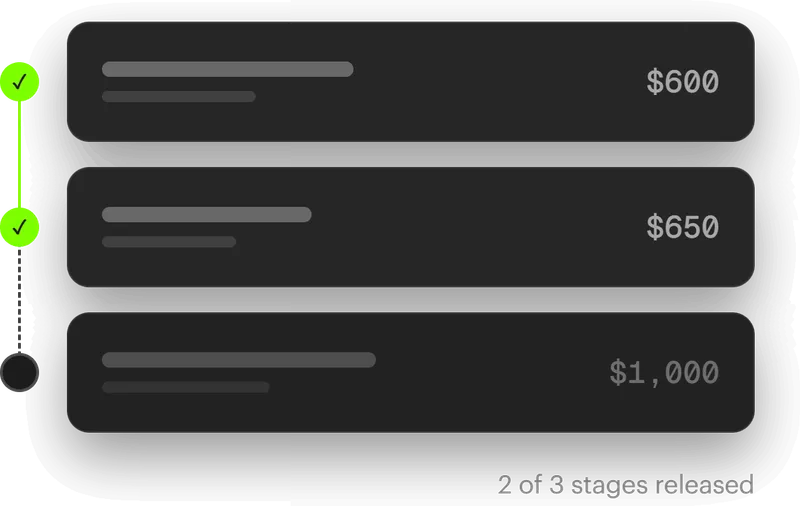
Every gig runs on a payment schedule you both agree on up front, and every payment runs through Stripe. On an outcome-based gig each stage is charged before the work starts and held by Unjumble until sign-off, or until it pays out on its own 14 days after it's submitted. On a time-based gig you're charged for each month as it starts, and it pays out when the next month starts unless you raise an issue.