What should I charge for website copywriting?
Quote per page or for the whole site, worked out from your hours. On Unjumble, the middle half of the 26 copywriters who list a rate set $65 to $150 an hour, with a midpoint of $110, before the fee comes out. Of the 42 who state their experience, 27 have 10 years or more. A 5-page site (home, about and 3 service pages) with a briefing call, research and 2 rounds of edits is often 20 to 35 hours, or $2,200 to $3,850 at the midpoint.
How do I scope a website copy gig so it doesn't blow out?
Pin down the page list, what each page includes and the rounds of edits before you price it. Say whether page titles, meta descriptions, buttons, form text and image alt text are in, because owners often assume they are. Ask whether design or copy comes first: writing into a finished layout means working to space limits, and writing first means you're also proposing the structure. Ask for one person on their side to give combined feedback, and say what counts as a new brief, such as an extra page or a change of offer.
What website copywriting gigs do businesses post?
New sites and rewrites, usually the homepage, about page and service pages, often with a web designer or developer waiting on the words. Others are sites that get visits but few enquiries, pages for each area or service a business covers, and copy that has to be reworked when a site moves to a new platform. Copywriters on Unjumble most often also list Marketing Strategy & Planning and Brand Positioning & Messaging, so if you can shape the message as well as write it, say so on your profile.
What wins a website copywriting bid?
Showing you know what each page has to do. In a few lines, say what a visitor should understand and do on their homepage and main service page, and point to one thing on their current site that gets in the way, such as a headline about the business instead of the customer. Explain how you'll get the information out of them, like a questionnaire and a 30-minute call, because owners dread writing it themselves. List what's in each page and your rounds of edits, so they can compare bids on more than price.
What should a website copywriter's portfolio show?
Whole pages in place, not excerpts. Link the live page or a full-page screenshot, with the brief in a sentence and what you changed. One before and after of a rewrite shows more than 5 polished samples. Add a result if the owner is happy to share it, such as more enquiries through the contact form, or a service page that now shows up for the search it targets, over a stated period. Show a range of businesses and voices, and include a site you wrote alongside a designer, since many website gigs involve one.
What should I deliver at the end of a website copy gig?
Copy laid out page by page in the order it appears on the site, in a Google Doc or Word file the designer or developer can paste from. Mark the headings, buttons, form labels, page titles, meta descriptions and image alt text, and flag where a photo, testimonial or figure still has to come from the business. If you're loading the copy into WordPress, Webflow, Squarespace or Shopify yourself, price that in the bid. Read it once on the staging site before launch, because copy that worked in a doc can break in a layout.
Who owns the copy, and what admin should I sort?
You keep copyright in what you write as a contractor unless it's assigned to the business, and an assignment has to be in writing and signed. Say in your bid whether copyright moves on final payment, and that you can show the pages in your portfolio. The ACCC says a business must be able to prove what it advertises, so check lines like 'award-winning' or '500 happy customers' with the owner before they go live. You'll need an ABN connected to complete a gig on Unjumble, and you must register for GST once your GST turnover reaches $75,000. Check your situation with your accountant.
What fees come out of a website copy gig, and when do I get paid?
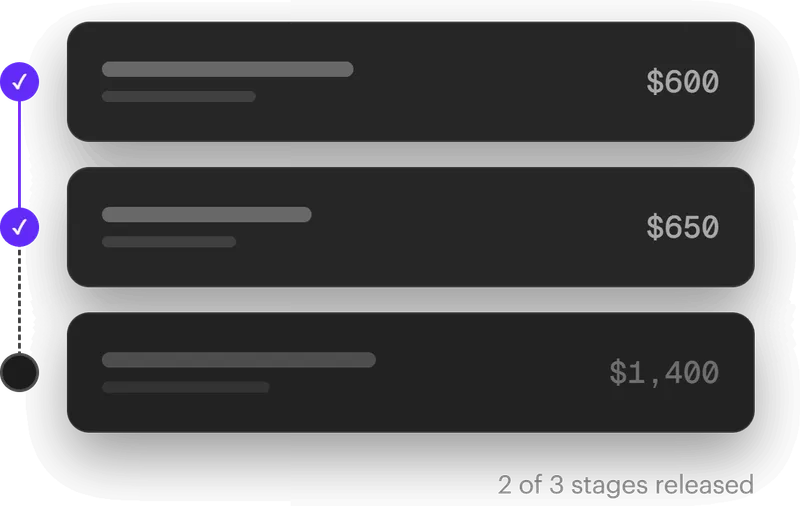
A 20% connection fee comes out of each stage until you've completed a gig with that business, then a 10% repeat fee on later gigs with them, so build it into your price. Each stage pays out when the business signs it off, or on its own 14 days after you submit it unless they raise an issue. Split a site into stages, such as the homepage draft, then the remaining pages, then final edits once the copy is in the design, so you're paid as each one is signed off instead of waiting on the whole site. More on
how fees work.