How much should I charge for SEO copywriting?
Between $65 and $150 an hour, with a midpoint around $110, going by the 26 SEO copywriters on Unjumble who list a rate. Those are their own figures, set before the fee. Of those who state their experience, 27 of 42 have 10 years or more, so you're pricing alongside plenty of senior writers. Businesses buy pages, not hours, so quote a price per page, and keep hourly for open-ended edits or rewrites where you can't see the scope up front.
How should I price a page of SEO copy?
Work it out from your hours per page, with the research included. If a service page takes you 4 to 6 hours for keyword research, an outline, the writing, the title and meta description and one round of edits, that's $440 to $660 at the $110 midpoint, before the fee. Price location pages that share a template lower than one-off service pages, and price keyword research for a whole site as its own stage. A monthly batch of pages or posts suits a retainer, with the number of pieces and edit rounds written down.
What kinds of SEO copywriting gigs do businesses post?
Mostly pages that sell: service pages, location pages for the suburbs or towns a business covers, product and category pages for online stores, and the homepage. After that come search-led blog posts, rewrites of old pages that have slipped down the results, and copy for a new website before it launches, often alongside a web designer. Some briefs never say SEO and just ask for website copy that shows up on Google, so read the brief for the goal, not the label.
What wins an SEO copywriting bid?
Showing you've already looked at their site and the searches their customers make. Name 2 or 3 pages you'd write or fix first and the search each one should rank for, in plain English rather than keyword jargon. Say what you need from them, such as a 20-minute call or their FAQs, because owners worry about copy that reads like it was written for a robot. Finish with what each page includes (title, meta description, headings, internal links), your edit rounds and turnaround, so the business can compare bids on more than price.
What should an SEO copywriter's portfolio show?
Live pages, each with the search term it targets and what happened after it went up. Clicks or impressions from Google Search Console, a ranking for a named search, or more enquiries from that page all count, as long as the client is happy for you to share them; leave the name off if not. Show a before and after for one rewrite, and cover a range of page types: a service page, a location page and a product or category page. A business wants proof the copy brought in customers, not just that it reads well.
What tools and handover files do businesses expect?
Copy in Google Docs or Word, laid out the way the page will look, with the target search term, title tag, meta description, headings and suggested internal links marked at the top. Name your research tool in the bid, such as Semrush, Ahrefs or Google Keyword Planner, and hand over the keyword list so the business can track it in Search Console. If you're loading pages into WordPress, Shopify or Squarespace yourself, say so and price it, because that's where extra hours tend to hide.
Who owns the copy, and what claims can I put in it?
The business owns your copy only if your agreement transfers it: in Australia, a contractor keeps copyright in what they create unless it's assigned, and an assignment must be in writing. Say in your bid whether copyright moves on final payment and whether you can show the page in your portfolio. On claims, the ACCC says a business must be able to prove anything it advertises, so check lines like "500 happy customers" or "fastest in town" with the owner before they go live. If you use AI to draft, tell the business.
What fees come out of an SEO copywriting gig, and when do I get paid?
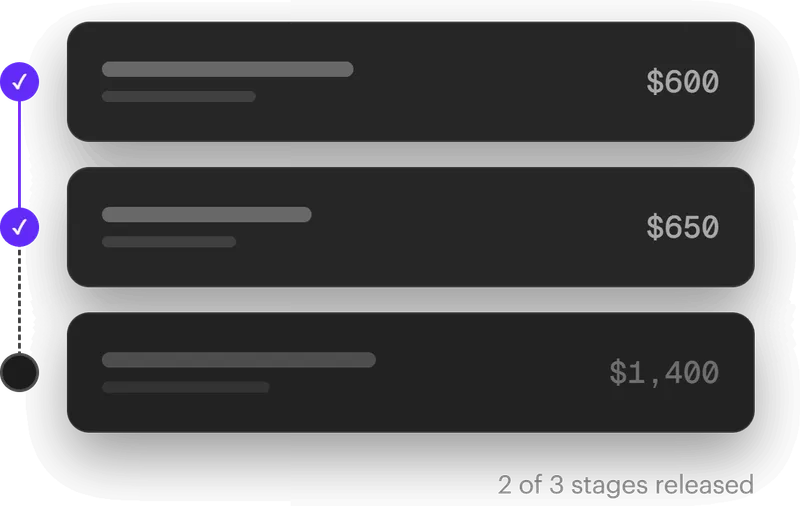
A 20% connection fee comes out of each stage until you've completed a gig with that business, then a 10% repeat fee on later gigs with them, so build it into your price. Each stage pays out when the business signs it off, or on its own 14 days after you submit it unless they raise an issue. Split a bigger gig into stages, such as keyword research, the first pages and the rest, so you're paid as you go. On a monthly retainer, each month pays out when the next one starts, unless the business raises an issue. More on
how fees work.