What do landing page designers charge on Unjumble?
Nationally, the middle half of landing page designers on Unjumble who list a rate set $70 to $150 an hour, with a midpoint of $110, from 36 rates. Those are their own figures, before the fee comes out. Of the 71 who state their experience, 30 have 10 years or more. Most landing page gigs suit a fixed price per page, since the scope is clear once you know the copy and platform. Hourly or a retainer suits ongoing work, like new campaign pages each month or testing variants against each other.
How do I quote a landing page?
A fixed price for the page, with copy, build and tracking as separate lines. Ask first whether they have copy, images and a platform, because designing and building from finished copy is a different gig from writing it too. At the $110 midpoint, a page at 12 to 20 hours of design and build is $1,320 to $2,200 before the fee. Price a second variant for testing, or a matching thank-you page, as add-ons. Say how many revision rounds are included, and that launch means live on their domain with the form and tracking checked.
What kinds of landing page gigs do small businesses post?
Mostly pages built for one action: a page for a Google Ads or Meta Ads campaign, a lead form for a service business, an event or launch page, or a booking or quote request page. Another common brief is a page that gets clicks but no enquiries and needs fixing. Landing page designers on Unjumble most often also list Web Design, Web Development and Logo & Brand Identity, so if you can build the page as well as design it, or match it to a brand you made, say so in your profile.
What wins a landing page bid?
Showing you'll design for the one action they want, not just a good-looking page. Ask where the traffic comes from and what the ad says, then sketch the order of the page in a few lines: headline matching the ad, proof, offer, form. Say how it will look on a phone, since most ad clicks land there. Link a page you built with its result, such as enquiries per week before and after. A bid that asks one sharp question about their offer stands out against a long list of tools.
What should a landing page portfolio show?
Pages next to their results. For each one, show the phone and desktop versions, the ad or email that sent the traffic, and what changed: conversion rate, enquiries or cost per lead, over a stated period. Get the client's permission before you share their numbers, or round them and leave the name off. If you ran a test, show both variants and which one won. Pages that are no longer live still count, so keep full-page screenshots of each one before it comes down.
What should I hand over when a landing page goes live?
A working page the business can edit, and proof the tracking works. Hand over logins in their name for the page builder (Webflow, WordPress, Framer or Unbounce), confirm form enquiries land in their inbox or CRM, and show the conversion firing in GA4 and in their Google Ads or Meta account. If you add tracking pixels for a business covered by the Privacy Act, set them to collect only what's needed and check their privacy policy mentions them. Agree this list in your bid, so the final stage has a clear finish line for sign off.
Who owns the page, and what admin should I have sorted?
You own the design and code you create unless your agreement transfers it: in Australia, IP a contractor creates stays with the contractor unless the contract says otherwise. Say in the bid what transfers on final payment, and that you can show the page in your portfolio. You'll need an ABN connected to complete a gig on Unjumble, and you must register for GST once your GST turnover reaches $75,000. A page that doesn't convert can lead to a claim, so professional indemnity insurance is worth a look. Check your situation with your accountant.
What fees come out of a landing page gig, and when do I get paid?
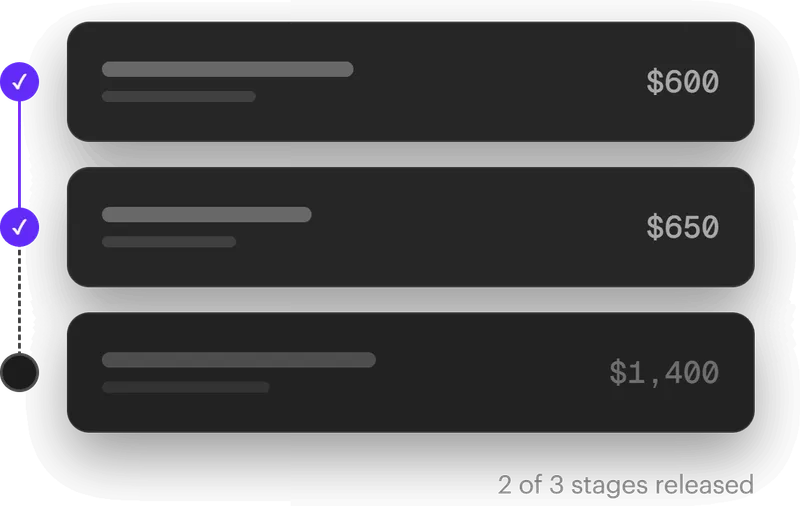
A 20% connection fee comes out of each stage until you've completed a gig with that business, then a 10% repeat fee on later gigs with them, so build it into your price. Each stage pays out when the business signs it off, or on its own 14 days after you submit it unless they raise an issue. Two stages usually suit a single page: design first, then build and launch, so you're paid for the design before you build. More on
how fees work.