A maker at heart, I construct visual identities, brand stories, motion graphics, social media strategies for the creative and ambitious.
I have multifaceted experience working as a digital designer in one of Australia's top creative production agencies, while simultaneously running my freelance design business. I have experience across boutique brand design all the way through national retail brands.
Logo & Brand IdentityGraphic Design (Signage, Posters, Digital & Print)+11
Hi, I’m Susan, a seasoned copywriter, creative and wordsmith. Whatever you need writing - from a social post to a full brand story - I’ll find the perfect words for you. And if you need brand strategy, brand design, social content, or digital expertise, I know the perfect people to help. I’m fast, good and affordable - not often you find all of those in one sentence!
Logo & Brand IdentityGraphic Design (Signage, Posters, Digital & Print)+17
I'm an event designer specialising in 3D renders, production design and creative content for live, hybrid and virtual events. I design spaces that look stunning in a render and actually work on the day. Beyond the 3D, I handle the full visual layer of an event: presentation design, motion graphics and animated screen content, event branding, social media and landing pages .
I'm Cecilia, a creative director with almost 20 years turning brands, books and podcasts into work people remember. Cover art for iHeart, Nova and Mamamia. Bestselling book covers. Business Chicks events with Richard Branson and Sarah Jessica Parker in the room.
I work with people who know what they want (or trust me to find it), value clear communication over endless revisions, and want a brand that looks as sharp as it sounds.
Sydney based, clients everywhere.
Logo & Brand IdentityGraphic Design (Signage, Posters, Digital & Print)+12
Presentation & pitch deck design in Adelaide, questions
It depends whether you need the story sorted or just the look. A design-only gig takes your existing content and makes it sharp and on-brand: layouts, type, charts, icons and a consistent template. A fuller gig also helps with the narrative, the order of the slides, what each one needs to say and what to cut, then designs it. Be clear up front which you want, because reworking the story is a bigger job than polishing slides you've already written.
Content is the story and the words: what each slide argues, in what order, and the numbers behind it. Design is how it looks and how clearly it reads: layout, hierarchy, charts and consistency. A great-looking deck with a muddled story still loses the room, and a sharp story in ugly slides undersells you. The best gigs handle both, but if your content's already locked, say so and you'll get bids scoped to design only.
One clear idea per slide, a story that builds, and visuals that do the talking. The strongest decks cut the wall of text, lead each slide with a single takeaway, and let charts and images carry the point so the audience listens to you instead of reading ahead. Investors and buyers decide fast, so the first few slides have to land the what and the why before attention drifts. Clear and confident beats crammed every time.
An investor deck makes the case for backing the business: the problem, the market, the model, traction and the team, built to raise money. A sales deck makes the case for buying: your customer's problem, your solution, proof it works, and the next step. They share a polished look but the story and the goal differ, so tell the freelancer which one you need. A good freelancer shapes the narrative around that audience, not a generic template.
A design polish of an existing deck can turn around in a few days to a week. A full build, where you shape the story, design every slide and run a couple of revision rounds, usually takes 2 to 4 weeks. The biggest delay is almost always your content: a freelancer can't design slides that aren't written yet. Have your key numbers and rough points ready before the gig starts and it moves much faster.
For an internal update or an early draft, Canva templates and AI slide generators will get you moving, and that's fine. Where a freelancer earns their keep is the stuff that wins a raise or a contract: a tight narrative, custom charts that make your numbers obvious, and design polish that signals you're serious. AI can fill slides quickly, but it tends to pad rather than sharpen, and it won't make the hard call about what to cut. For a high-stakes pitch, that judgement is the value.
Whichever you'll actually present and edit from, so tell the freelancer at the start. PowerPoint and Google Slides are the safe defaults for sharing and co-editing; Keynote suits Mac-only presenters. Most freelancers design in their own tool then hand over in your format, but fully editable charts and text don't always survive a conversion cleanly, so confirm the deliverable up front. Ask for the fonts or web-safe substitutes too, so it doesn't reflow on someone else's machine.
The finished deck in your chosen format (PowerPoint, Google Slides or Keynote), fully editable so you can update a number before a meeting. Ask for a reusable template, the master slides and layouts, so future decks stay on-brand without a redesign. A PDF export is handy for sending. If custom charts or icons were built, make sure those are editable too, not flattened into images you can't change.
In Adelaide, a design polish of an existing deck often runs $400 to $1,200. A full investor or sales deck with narrative help, custom charts and a reusable template typically lands between $1,500 and $5,000, and a high-stakes raise deck can go higher. Price tracks the number of slides, how much story and chart work is involved, and how many revision rounds you need.
Hourly rates run about $75 to $190. Nearer $75 a junior can apply your existing template and tidy up spacing and alignment across a deck. The middle of the band is where most deck gigs land, a designer who'll rebuild slides properly, make charts readable and leave you a template you can reuse. Toward $190 you're into design lead territory, and for a raise or a big pitch that's often the right call, because the work becomes narrative as much as layout. Slide count matters less than how much of the story still needs figuring out.
Look for a portfolio of real decks, ideally investor or sales decks close to yours, and judge whether their slides are clear and persuasive, not just pretty. Check they'll hand over an editable file in your format with a reusable template, read their verified reviews on Unjumble, and confirm whether narrative help is included or design only. A quick chat about your audience and goal tells you fast whether they get the brief.
Post a pitch deck design gig in 60 seconds. Describe the work, set your budget and timeframe, and choose whether it's time-based or outcome-based. Local freelancers send a bid with a quote, you compare their profiles, portfolios and verified reviews, then pick the one that fits. Posting a gig is free. When you accept a bid, each stage is the freelancer's price, plus GST if they're registered, plus our 5% platform fee (worked out on the price before GST, GST included). A $1,000 stage from a GST-registered freelancer comes to $1,150.
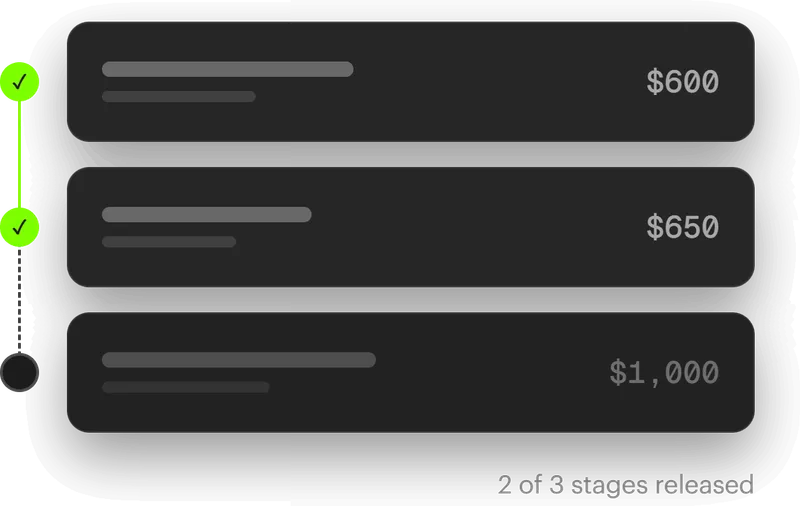
Every gig runs on a payment schedule you both agree on up front, and every payment runs through Stripe. On an outcome-based gig the stages are often the structure and then the designed slides. Each one is charged before the work starts and held by Unjumble until sign-off, or until it pays out on its own 14 days after it's submitted. On a time-based gig you're charged for each month as it starts, and it pays out when the next month starts unless you raise an issue.